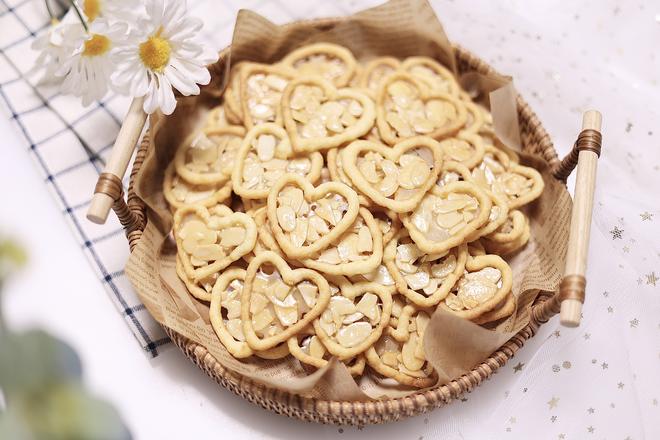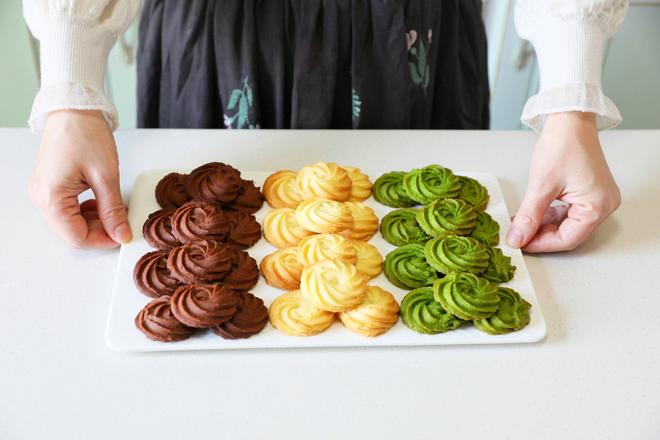
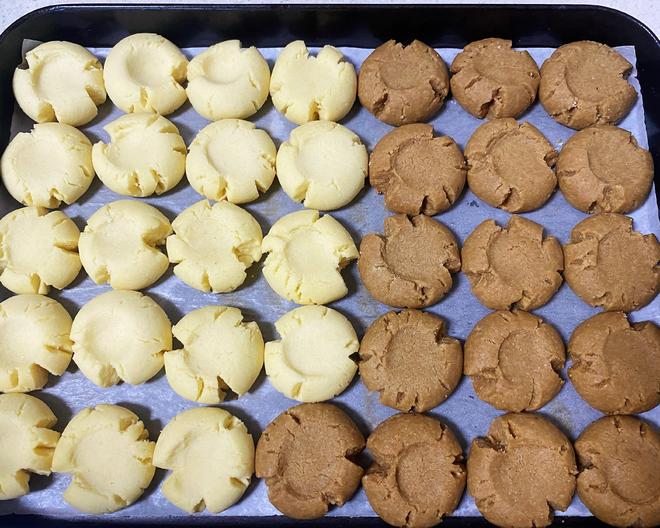
This is an extremely simple and easy-to-make cookie recipe, suitable for baking beginners. It is an essential item for home-based baking businesses, featuring high production efficiency and popular as a best-selling product. Each cookie is bite-sized, offering a satisfying crunch with every bite, and is delicious without being overly sweet. It is simpler and tastier than traditional butter cookies, with a mild sweetness that is not cloying.
Perfect for gifting, as a souvenir, or as a New Year treat. The yield varies due to the flexibility of the recipe, depending on the size and thickness of the cookie rings. For an 80-liter oven, three trays yield approximately 100-120 small to medium-sized cookies. For sale, pack 100-200 grams per box, typically priced at 30-40 units, adjusted based on ingredient costs and packaging. These cookies are not ideal for shipping due to their fragility. Ingredients for cookie rings: 50g butter, 30g powdered sugar (I used erythritol), 0.5g salt, 40g egg white, 80g all-purpose flour, 20g almond flour (or milk powder). For filling: 30g butter, 10g powdered sugar (erythritol), 45g water syrup/malt syrup (amber malt syrup is also suitable), 40-50g almond slices. Prepare all ingredients in advance. Butter and eggs must be taken out of the refrigerator beforehand. Soften the butter to a toothpaste-like consistency, then add powdered sugar. Ensure thorough softening so a finger can easily press through; otherwise, subsequent steps will fail. Use a mixer to whip until the volume increases, achieving a fluffy, pale, feathery texture. Extended tip for softening butter in winter: Use room temperature softening, sunlight exposure, a hairdryer or microwave in 10-second intervals, a proofing box, a warm water bath, air conditioning, radiators, or hand warmers. Any method to warm the butter is acceptable. If the butter hardens again due to low room temperature, keep a hairdryer blowing warm air from 30-60 cm away (avoid melting the butter) or place it over a 30°C warm water bath. The best solution is to warm the entire room to around 30°C, using air conditioning or heaters, especially in regions without central heating, to ensure smooth preparation. This advice helps overcome the common issue of cookie dough becoming too stiff to pipe in cold weather. Add the egg white to the whipped butter in 2-3 batches, beating until fully incorporated after each addition to prevent oil-water separation. Eggs must be at the same temperature as the butter; otherwise, separation may occur. For small quantities, scrape down the bowl frequently with a spatula during mixing. The final mixture should appear as described. Sift and add all-purpose flour and almond flour along with a pinch of salt. Use a spatula to fold until just combined with no dry flour visible. Avoid overmixing to prevent gluten development. Transfer the dough to a piping bag with a small cut tip. Disposable piping bags are prone to bursting; layer 3-5 bags or use a cloth piping bag.Line the baking tray with parchment paper or a silicone mat. Pipe round, oval, or any desired shapes onto the mat, applying pressure during piping. If using a black baking tray (which easily absorbs heat), first lay a sheet of aluminum foil to prevent burning, then add a layer of parchment paper on top. I also piped a tray of heart shapes. Irregular shapes are acceptable; for those with perfectionist tendencies, gently adjust the shape by hand. The recipe yield varies greatly due to flexibility in size and thickness of piped shapes; the quantities provided produced 3 trays of small to medium-sized cookies (approximately 100–120 pieces total). Reducing the recipe is not recommended, as quantities may prove insufficient. Upon completion, seal and set aside. Proceed to the filling: heat butter, sugar, and malt syrup in a pan until fully melted and bubbling, then turn off the heat (a microwave may also be used). Immediately add almond flakes and stir until evenly coated. I used erythritol as the sugar substitute; this amount is mildly sweet. To reduce sweetness, add more almond flakes to diminish coating proportion. Once the filling begins to set, use chopsticks to place a small amount (about one-third of each cookie ring) into the center. During baking, the sugar will melt and fill the ring entirely. Overfilling may cause spillage and excessive sweetness. If the filling hardens excessively, reheat it briefly. Place the cookies into a preheated oven. For a Pei Cui K85 Pro convection oven (three racks), bake at 155°C for 8–13 minutes. For a Pei Cui K55 conventional oven (single rack), bake at 160–170°C (upper and lower heat) for 8–13 minutes. Other trays can wait; baking times are short. Do not leave unattended—cookies are small and thin, prone to burning. After baking, cool completely before peeling off the paper. These compact, attractive cookies are quickly consumed. Store in an airtight jar to prevent moisture and loss of crispness; consume within one week. Ideal as a snack for binge-watching—crisp, crunchy, and addictive. A must-have for private kitchens or bakeries, this batch-production-friendly, bestselling item surpasses traditional butter cookies in ease and flavor: mildly sweet without being cloying. For retail, package 100–200 g per box (typically priced at 30–40 units of currency; decorative metal boxes may sell for 48+). Multiple small pouches are also suitable (avoid overfilling to prevent breakage); external cardboard boxes can be added. Adjust packaging and pricing based on ingredient costs. Not ideal for shipping due to fragility. Heart-shaped cookies make perfect gifts for Valentine’s Day, anniversaries, or New Year’s—guaranteed to impress. Listen to the satisfying crunch; make them today—delicious and fun!